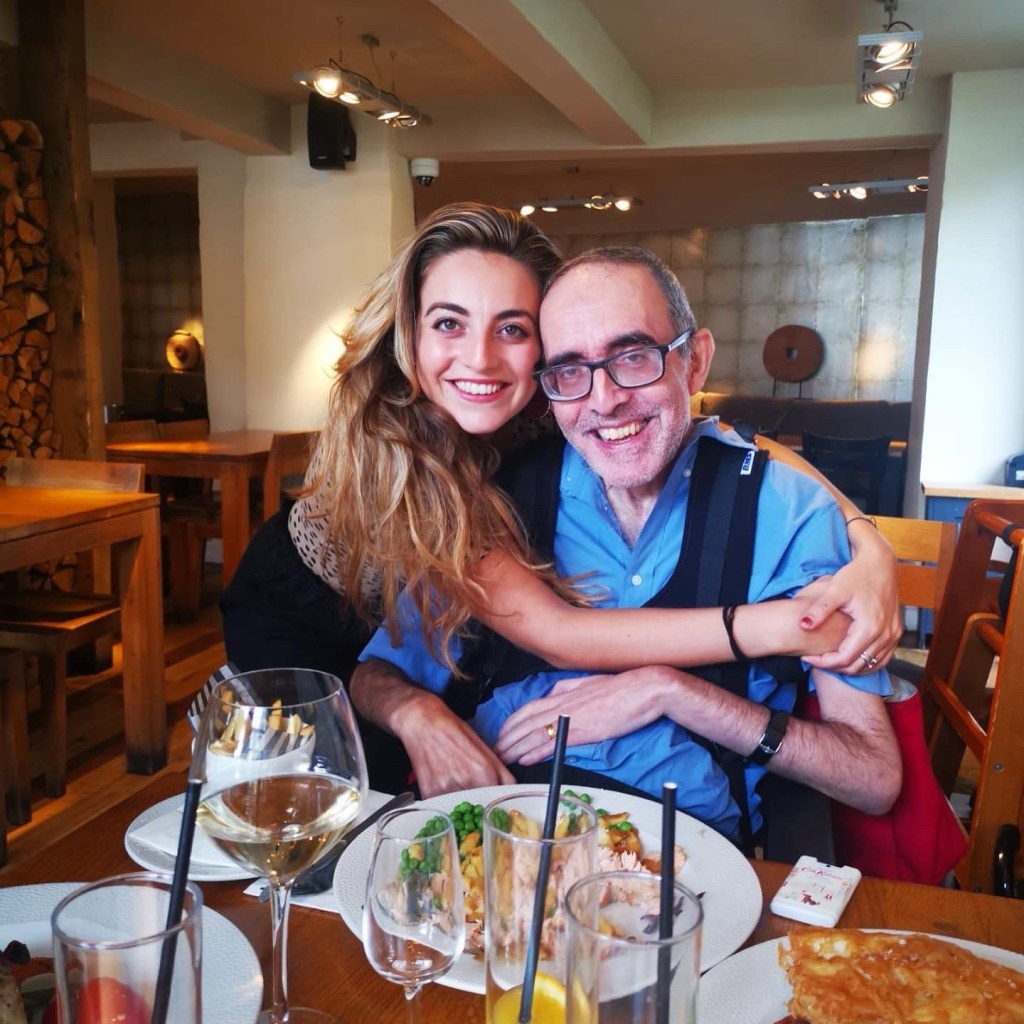
There are three very important awareness dates or weeks in the calendar that I ensure I’ve prepped for in advance. 1 is of course Christmas, because despite being as far from Christian as you could possibly get, I can think of nothing better than lying in my PJs for two days straight, stuffing myself on roast potatoes and watching Love Actually on repeat. The second is Mental Health Awareness Week which reminds me to take a breather – it’s easy to forget it when you’re busy – and do something mindful, whether that’s meditating, reading a book or simply journaling in my diary. The last but certainly not the least is MS Awareness Week; a week incredibly close to my heart which I try to write for every year.
Multiple Sclerosis, for those reading who don’t know, is an illness that affects over 130,000 people in the UK, with nearly 7,000 newly diagnosed each year* and of the 7.673 billion people there in the world, approximately 2.8 million of those are affected by MS**. Unfortunately, one of those people is my Dad.

Lately, I’ve noticed that many celebrities have been open about their diagnosis. I learnt that one of my favourite actresses Christina Applegate was diagnosed and I felt in awe of her resilience; being so open to millions of people about something so difficult. The recent news of Dave Myers’ passing, one half of the Hairy Bikers, was also incredibly hard to digest. When I was younger and searching online for those who had family members suffering, I read he cared for his mother who was diagnosed with MS. It seems incredibly cruel that he passed from cancer, when after all he gave to someone else, he should have been given life to live to the fullest. But that’s just how it goes I guess.
This piece I’ve penned is slightly different to my usual blog posts which I usually connect in some way to my travels, but after this last year, I had to write and dedicate this to my parents and how their attitudes have positively impacted me. My mother, who despite the difficulties she’ll never admit to, of seeing the man she loves struggle with a difficult illness, is always there for him, and for her children – no matter what age we are. ‘It could always be worse’ is her mantra. She is a rock; the glue that holds our family together and we would be nothing without her.
I also would like to dedicate this piece to my father; my dynamic, energetic, brilliantly funny and incredibly inspiring father, who despite being wheelchair bound, has kept the spark that attracted so many friends to him during his heyday and brightens the day of anyone blessed to come into his presence. The warmth he possesses and the ability to take the days as they are, what he can do rather than what he can’t, is the reason I continue on. It is his attitude that has softened the bitterness and helped to heal the anger. It’s not entirely gone, I’ve only just started working on it to be honest, but it would be a lot worse without his determined outlook.
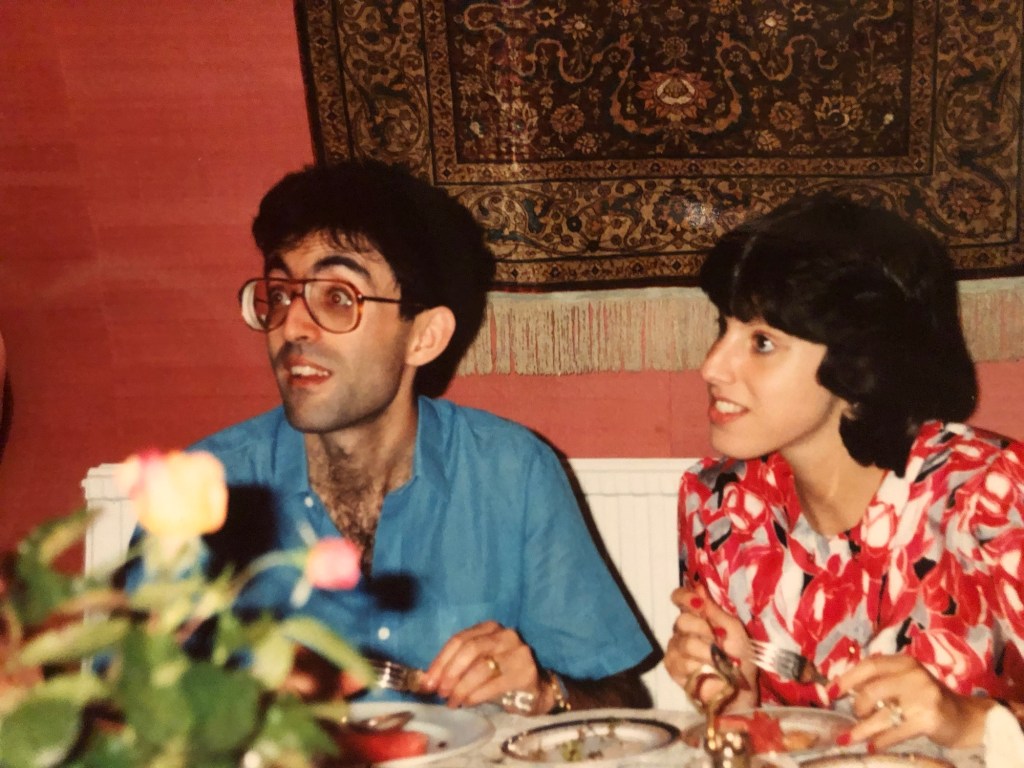
Lesson 1: The Power of Positivity
MS brings lots of challenges as I’m sure you’re aware. One of them is obviously watching a loved one deteriorate, but sometimes it’s everything else on top that can make it worse from the loss of control and the brutal realisation that the life of someone is only in the universe’s hands to simply not being able to do what it is other people do with no thought. If we have ever planned to go somewhere, having to work out how many carers you may or may not need and whether places are disabled friendly or not – you’ll be amazed at restaurants who claim to have a disabled toilet but it’s not big enough for a wheelchair – can be stressful. Unexpected global events like pandemics, which you never anticipate, can suddenly occur, making you anxious over what could happen.. the list sometimes feels never ending.
However, with all that said, both my parents live life in a fiercely positive manner. I’m sure they have fears like anybody else, but they’ve had the best part of over twenty years to realise that ‘worrying gets you nowhere’ and simply to deal with things as and when they happen. MS is uncontrollable as are world events, and although it is sometimes hard to implement, I’ve learnt how vital taking care of myself is; to try and keep present and take life one step at a time, worrying about things as and when rather than predicting the worst.

Lesson 2: The Importance of Support Systems
I think with important life and age milestones, you start to realise which friends are truly going to be there for the long haul. Even then it’s not entirely guaranteed, but if they’ve been around from school, after university, when either or both of you get into relationships, married, kids etc, they’re most likely going to be there for a while. When you add in a debilitating illness, I think you know for certain. Over the years, both my Dad and Mum’s friends and family have seen a physical decline in my Dad. They knew him when he partied and danced (albeit badly) the night away, they’ve known him walking with a stick, a frame and now in a wheelchair and they’ve visited him numerous times when he’s not been at our home due to illness or MS complications. You may think that people stick around, but from our experiences, not everyone can seemingly deal with change and/or forget people exist when they have to make more effort to see them. The friends and family over the years who have made that effort have shown me just how good a friend he must have been, for them to take regular time out of their week to visit, and how incredibly lucky he is to have them in his life. We all deserve friends and family like that and it’s taught me those that are there throughout are the relationships you need to nurture and put your time into.

Lesson 3: Adaptability and Flexibility
When my Dad was forced to stop working, he could have sunk into a deep depression, it would be totally normal to do so. The change in routine, the inability to do what he wants to do, the constant staying at home. But he didn’t. Instead, and with suggestions from my Mum, he applied to Age UK to be a phone volunteer, so elderly people that felt lonely had someone to speak to. To this day, he keeps in contact with a lady and has done so for many years.
My parents also decided to throw charity parties in the summer to raise money for the MS Therapy Centre in Harrow; a centre my Dad used to visit for treatment which relies solely on donations to provide rehabilitation and physical therapy to individuals affected by MS. There was a combined effort of Mum visiting local shops to ask for prizes to donate to our bingo we’d throw at the party and my Dad calling his friends to ensure they’d all be there to join. It became such a pastime that I spoke about it in primary school quite proudly, one time even creating a quiz for people to partake in at the event. Mum and my Dad also volunteered for the Willow Foundation, a charity founded by Arsenal goalkeeper Bob Wilson, to provide special days for seriously ill young adults – we were even invited to meet Bob and his late wife Meg at an event!
‘Why do you volunteer for them?’ I asked my Dad one day. ‘Because I may have the condition I have, but I at least experienced life beforehand’ he replied. ‘Some of these adults are as young as 18, they’ve not had the opportunity to live like I once did. You see Emily? There’s always a situation worse off.’
With my Dad now recovering from another MS complication, he continues to be positive, learning French once a week – his favourite language that he was always pretty good at. It’s the little things that really do make a difference and I’ve learnt that whatever life throws at you, there is always a way to adapt to it – there has to be, even when you think it’s impossible.

Lesson 4: Advocacy and Education
From our regular charity parties held to raise funds for the MS Therapy Centre, I came to understand the importance of raising awareness of an illness many people are unfamiliar with, even considering the alarming figures of those diagnosed.
I realised early in life the importance of education about MS. As a teenager, I created a video interviewing people on the streets about the illness and to my shock, most were unaware of what it was. I remember feeling quite upset that something that had had such a profound effect on my family wasn’t as well known as I thought. It was that experience combined with my parents’ fundraising efforts that made me realise how crucial education and sharing real-life stories is to raise awareness.
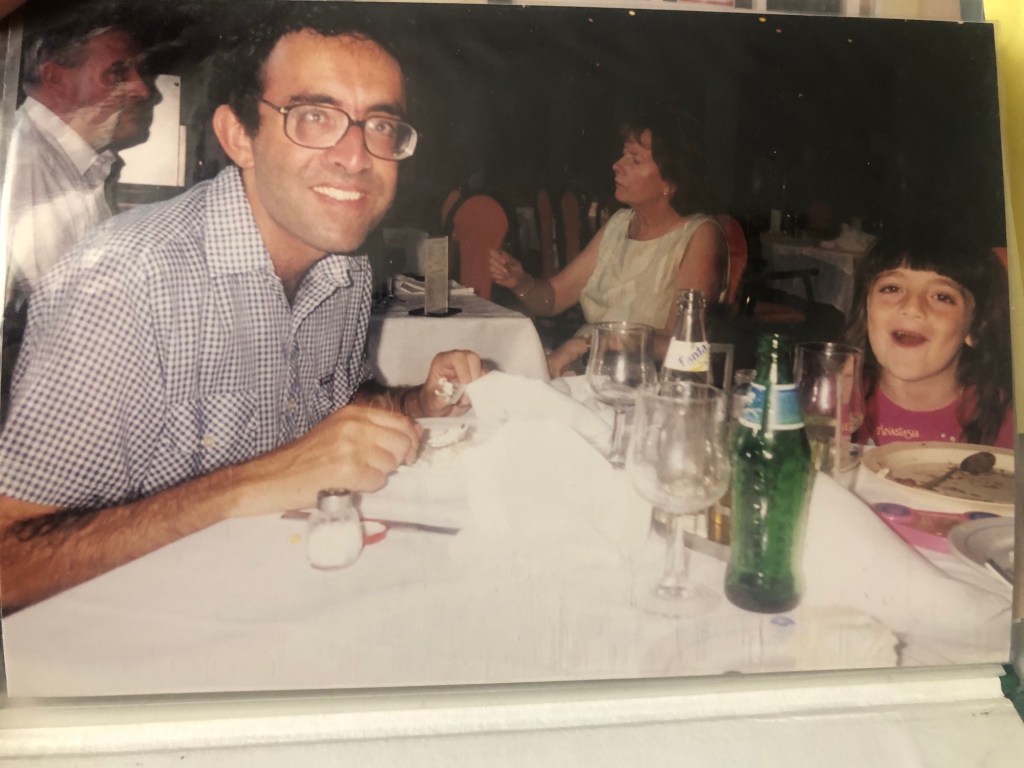
Lesson 5: Finding Joy and Gratitude
My parents’ relationship is one I can imagine most wouldn’t think exists; a love I aspire to have one day, which is why I won’t settle for anything less. You hear the classic ‘in sickness and in health ‘til death do us part’ in wedding ceremonies and seeing their relationship thrive despite the challenges has made those words incredibly meaningful to me. There aren’t many people who would be able to dedicate their life to someone who suffers with such a tough illness, to be there for every ambulance trip, for every health scare, to pull someone off the ground and see their loved one cry, to have to support their children when they see things no child should ever have to see. Not many people could give up work and miss social arrangements when there was no care available. Yet, my mum has done all this without a hint of regret, with an abundance of love for my Dad.
Similarly, the man who gave her the courage to be confident and grow in her own shoes, has a love and gratitude for my mum that cannot be captured in books or depicted in films. It is felt in every room they share, every look he gives her and every twinkle in his eye when he looks at her. He continues to make her laugh at his absolutely useless jokes and she continues to make him chuckle when she has to ask him about timing – she continues to be the worst person at being on time for anything, ever. They may not have the same life they once shared, where we’d go away for holidays once a year to Spain or Portugal, or have romantic couple dates or trips away, but I think it shows that the most real and raw relationships don’t need external factors to still make it wonderful. Simply being in a room with my Dad, chatting from morning to night, is something Mum can do on a daily basis and it blows my mind every time.
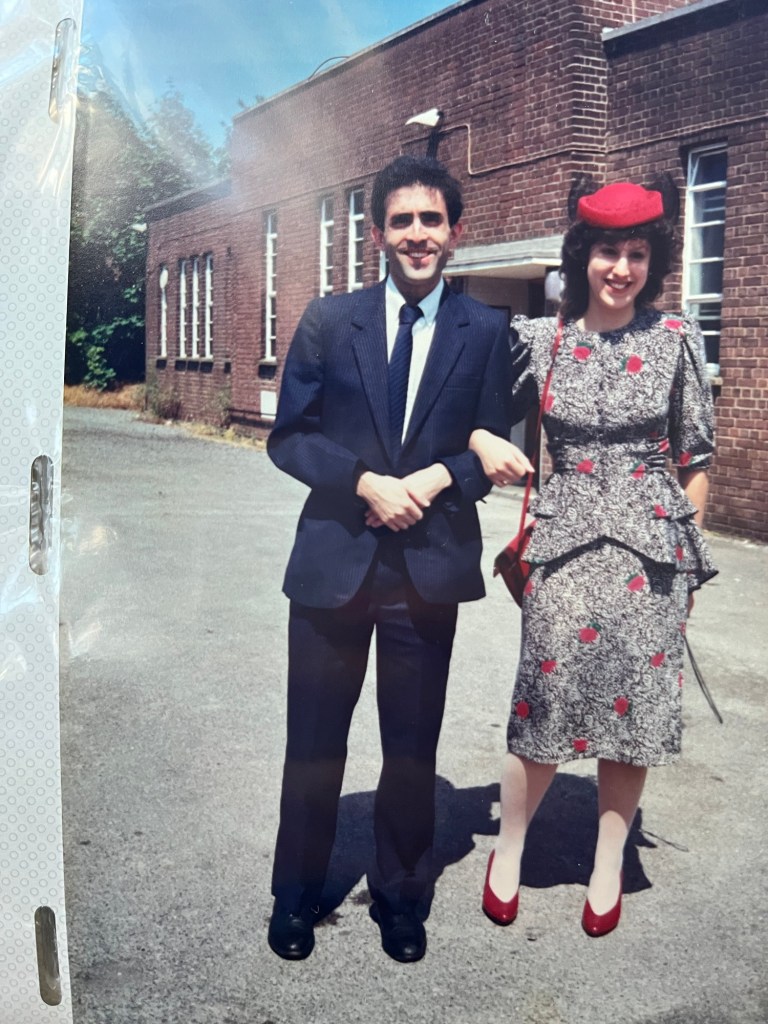
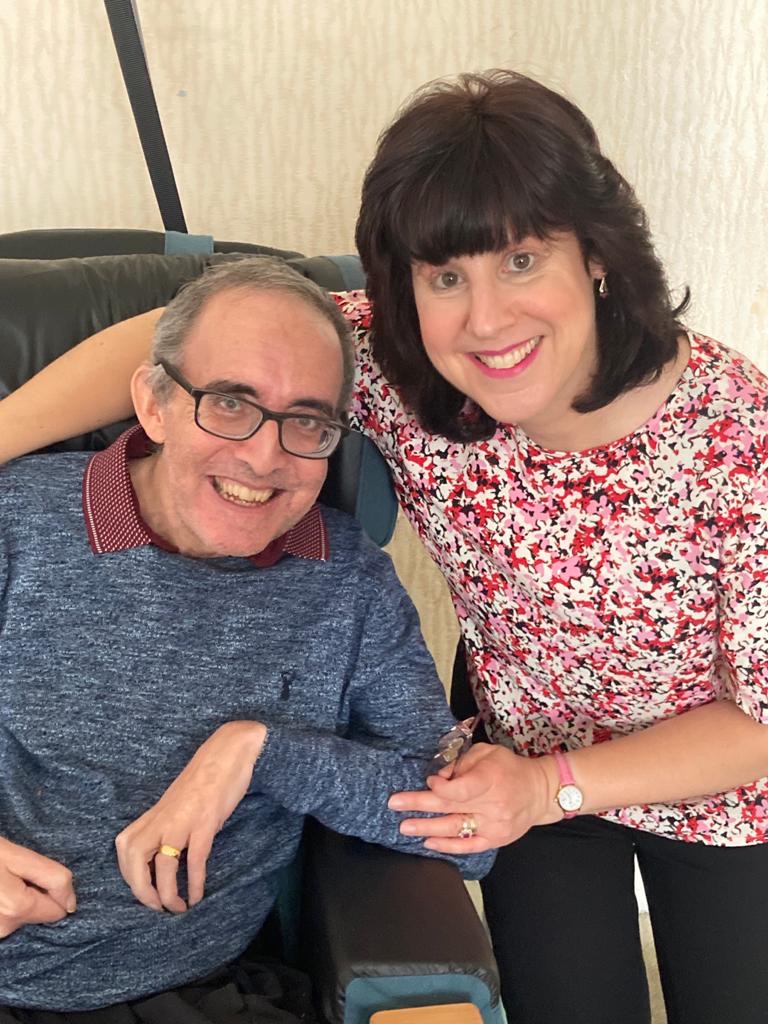
To conclude, I think my parents have taught me resilience in different ways, the importance of strong relationships, whether it’s platonic or romantic and the ability to stay positive as best as I can. Education and awareness for MS is another tool that I use in an almost therapeutic way, in the hope that one day there will be a cure, as well as writing in the hope that my words will help another person struggling.
Resources from
* MSSociety.org.uk
** SingleCare
 Emily's Backpacking & Mental Health Adventures
3 responses to “Strength in Struggle: 5 Life Lessons Inspired By My Parents’ Resilience”
Wow! Emily you are soo talented to be able to write like that. I found it very emotional to read, but you have absolutely encapsulated how your mum and dad have dealt so incredibly well with the challenges they have faced in their lives. Their love for each other is indeed something very special and they are very lucky in that respect. What wonderful parents you have! You too deserve all the happiness in the world and I hope with all my heart that you find it. You are such an inspiration to others. Lots of love, Fi. Xxx
LikeLiked by 1 person
Love you Fi, that’s very sweet and sorry it made you emotional. Lots of love and hugs. xx
LikeLike
Thank you for sharing those lessons with us. The part that stood out for me is your dad didn’t let his condition stop him from doing the things he is still able to do like volunteering and learning French and I have deep admiration for your mom for staying with him through it all. They’ll definitely be a reminder of what can be accomplished.
LikeLike